
Finding Fond du Lac Residents
Start with the record that proves the fact you actually need. Ownership questions point straight to the Fond du Lac County Real Estate and Tax Data Search. It takes an owner name, parcel number, or site address. It names the person on the tax roll, not everyone inside the home. Wisconsin MyVote is a matched voter service, so it is not a public block list. WCCA is the state circuit-court index. It can attach a county, case number, status, and public event trail to a name. For historical questions, turn elsewhere. Use city directories, newspapers, maps, and local indexes rather than current portals.
A sound Fond du Lac residents directory search rests on two anchors. Pair the name with an address, an age, a spouse, a case number, a parcel, or a known date. Be careful with mailing addresses. The tax roll may send notices somewhere far from the property itself. Renters and other household members can be absent from an ownership roll entirely. Protected voters, sealed cases, and confidential addresses are left out on purpose. Those gaps are limits of the public record. They are never proof that someone never lived in Fond du Lac.
- Search the county tax roll by owner name or site address.
- Use MyVote only for a matched voter self-lookup.
- Check WCCA with Fond du Lac County selected.
- Move to deeds or library directories when the date is older.
- Ask the correct custodian for material that is not online.
Fond du Lac Records Counters
Fond du Lac is a city and the county seat in one. That puts most of the records counters a visitor needs close together. They sit within a few floors of each other. Several of them are in or near the City/County Government Center at 160 South Macy Street. The Register of Deeds holds recorded land instruments and vital records on the first floor. Up on the second floor, the Clerk of Courts keeps the circuit-court files. Land Information works from the fourth floor. The City Clerk and other city offices handle records the city itself created. This compact arrangement is handy when an online index gives you only a locator number. For a fuller method built around addresses, try the Fond du Lac street directory.
Fond du Lac County Register of Deeds
160 South Macy Street, first floor
Fond du Lac, WI 54935
920-929-3018
Fond du Lac County Land Information
160 South Macy Street, fourth floor
Fond du Lac, WI 54935
920-929-3135
Wisconsin Elections Commission
Matched online voter service
Wisconsin statewide access
608-266-8005
Search Fond du Lac Parcels
The county property system offers three practical ways in. Search by owner name, parcel number, or site address. Any result can lead to the property card and the tax bill. Those two documents help separate the parcel's physical location from wherever the tax notice gets mailed. The parcel number is also the cleanest bridge into GIS layers and recorded documents. One caveat on detail. Fine building traits may sit with the local assessor. County Real Property Listing compiles the broader land, improvement, and ownership roll.
| Search field | Use it for | Important limit |
|---|---|---|
| Owner name | Find parcels under a known name | Ownership is not occupancy |
| Site address | Identify the land at a physical address | May differ from mailing address |
| Parcel number | Join tax, GIS, and deed research | County GIS expects its set format |
Parcel: a mapped unit of land. Its parcel number and legal description hold steadier as research keys than any owner's name.
Treat the parcel card as a lead only. The recorded deed is the instrument that proves the legal transfer. The county cautions that GIS data is reference material. It is not a survey or a legal determination. Confirm names, boundaries, and ownership dates against the source instrument itself.
Fond du Lac Deed Layers
Land research in Fond du Lac County runs across several date layers. The Register of Deeds reports that LandShark real-estate document images reach back to 1839. Separate grantor and grantee index books cover 1835 through 1985. Scanned tract-index books handle material recorded before June 1, 1994. A grantor is the party transferring an interest. A grantee is the one receiving it. The index steers you to the volume, page, or document number that retrieves the instrument.
Remote LandShark access is one channel among several. The county also provides public viewing terminals, staff guidance, and scanned book images. When you can, search by a known party or document number. Plat and certified survey map searches may use special formats. A C prefix marks a certified survey map number. An image may be missing online. Carry the index citation to the Register of Deeds counter. Do not assume the record does not exist.
Note: A deed proves a recorded property interest, while a city directory or voter match supplies separate evidence about residence.
Fond du Lac Court Names
The Wisconsin Circuit Court Access portal searches public circuit-court case information across the state. Selecting Fond du Lac County trims down same-name clutter. Documented fields include party name, birth date, business name, and county. They also cover case number, case type, citation number, issuing agency, and case status. A result may display public case events and judgments. WCCA does not sell or show every filed document, though. Pleadings, transcripts, exhibits, certified copies, and archived files stay with the Fond du Lac County Clerk of Courts.
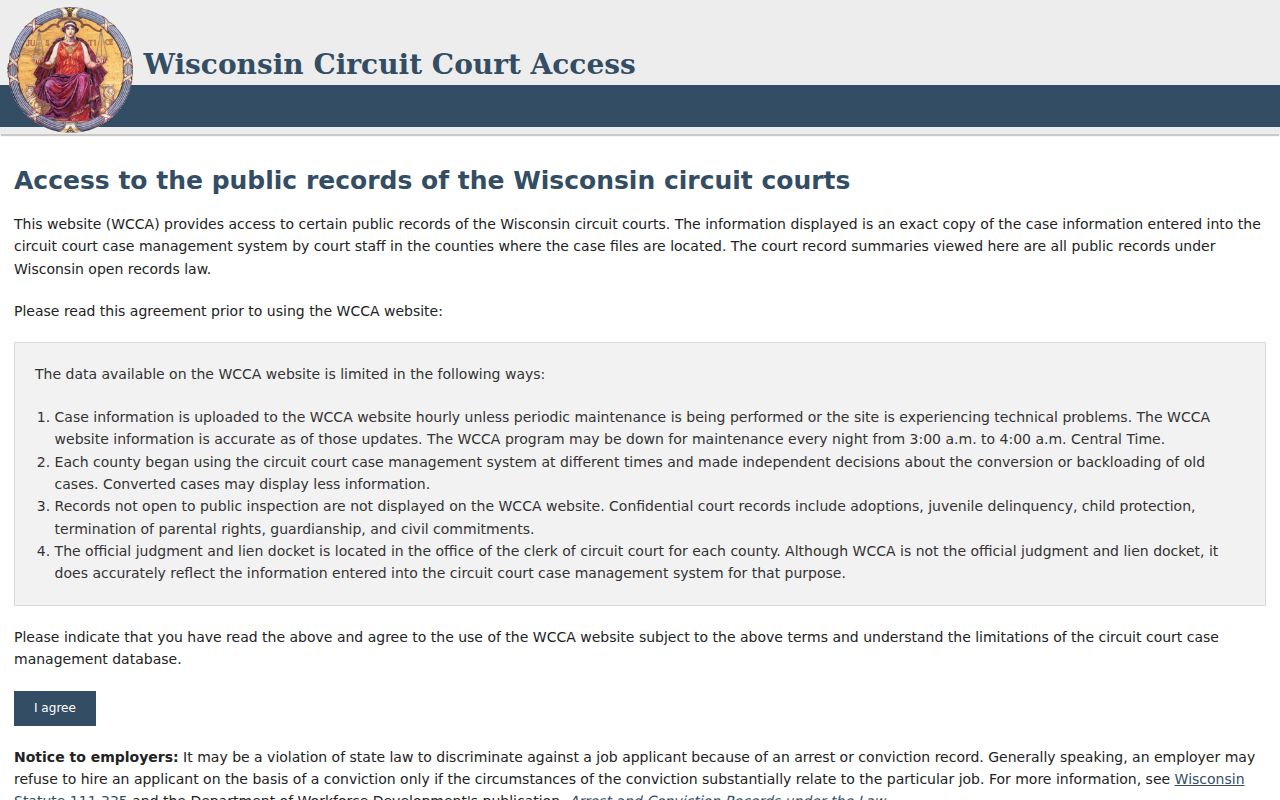
The search screen is a locator, not a biography. Before relying on a result, match the party to the county, case number, and case type. Add one more known fact to be sure. Juvenile, sealed, expunged, adoption, and other confidential material may not appear. Lakeside Municipal Court handles many city citations on a separate track. It publishes no public name-search index for those cases.
Current Fond du Lac Directory Sources
Fond du Lac County keeps no single roster of its residents. Every roll answers one public purpose. Property and deed systems exist to identify owners and the parties to land instruments. MyVote lets a voter confirm a registration by pairing a name with a birth date, or an address with a city and ZIP code. WCCA opens public case-index data to anyone. State business and license systems confirm an entity, its registered agent, its office, its filing status, or a professional credential. Whichever relationship you are checking, that relationship decides the right source.
| Source | Who It Lists | Keeper | Access |
|---|---|---|---|
| Real estate and tax roll | Named parcel owners | County Treasurer and Land Information | Free online search |
| MyVote matched lookup | The registered voter being matched | Wisconsin Elections Commission | Name and birth date, or address |
| LandShark deed index | Parties to recorded instruments | County Register of Deeds | Online and courthouse terminal |
| WCCA court index | Parties in public circuit cases | Wisconsin court system | Free index; files at clerk |
| DFI corporate search | Entities and registered agents | Wisconsin DFI | Free online search |
A Fond du Lac residents directory entry gains strength. A second roll backs it up. An owner name can be tested against a deed. A court party narrows once county and birth details line up. An entity name separates from a person's name through DFI. Build the one-person sequence on the Fond du Lac resident lookup page.
Verify Fond du Lac Records
A name by itself invites false matches. Copy it exactly as the first official record shows it. Include every detail, down to a middle initial, suffix, former surname, or business form. Then bring in a second fact drawn from a different record system. A parcel search may yield a site address and parcel number. A recorded deed shows the parties, the recording date, and the legal description. WCCA adds a county, case number, case type, and public docket dates. An older city directory can contribute a spouse, trade, employer, or former address.
Weigh the dates as much as the words. A tax record belongs to an assessment cycle. A deed marks a transfer that was recorded. A directory speaks for its publication year, and a court result traces a case timeline. Two sources can both be right while describing different moments in one life. When facts collide, keep both citations and ask the office behind the key record. The Treasurer or Land Information staff can decode parcel fields. The Register of Deeds can locate an instrument. The Clerk of Courts can pull the public case file.
- Roll
- An official list made for a specific function, such as taxation or voter administration.
- Index
- A locator that points to a fuller record; it may not contain the document itself.
- Criss-cross directory
- A directory arranged by street and house number instead of only by surname.
- Situs address
- The physical location of a parcel, which may differ from the owner's mailing address.
Spellings drift. Search the shorter stable piece of a name and confirm the hit with an address or a date. For historical Fond du Lac records, keep the old abbreviations. Try the person's trade, spouse, business, or a nearby landmark. German and English local print sources can render the same family in different forms. An empty search result often says more about the index or the era. It says less about whether a record exists.
Fond du Lac Voter Limits
MyVote Wisconsin offers two matched routes. One matches a voter through name and date of birth. The other works from a street address, city, and ZIP. A successful match can return registration status, a polling place, voting districts, and election details. It is not a street-wide resident browser. Wisconsin's voter-file rules do allow broader access through the election authority. Protected elector information stays withheld, and list requests carry their own format and fee rules.
A voter record leaves out children. It also leaves out nonregistered adults, former voters whose entries changed, and anyone protected through a confidentiality process. Treat it as proof of a matched registration, not of everyone at an address. For a lawful personal search, use it to confirm one specific registration. The Wisconsin DOJ Safe at Home program substitutes an assigned address. It also supports confidential-elector treatment for eligible participants.
Use records with care. Public access serves family research, civic checks, estate work, and fraud prevention. Never follow an address trail to stalk, harass, intimidate, or harm anyone.
Fond du Lac Vital Records
Wisconsin Statutes chapter 69 governs birth, death, marriage, and divorce records. The Fond du Lac County Register of Deeds and the Wisconsin Department of Health Services both issue certified copies. You can order at the county counter, by mail, or through the state's authorized online and phone vendor. The standard first copy costs $20. Each additional copy of the same record is $3. Identification plus a qualifying relationship or a direct and tangible interest is required for certified copies.
Uncertified copies carry different eligibility and cannot serve as legal identification. A divorce certificate lists the parties, date, and place. The decree and case file come from the Clerk of Courts. Genealogy access follows record-specific cutoffs: births through September 30, 1907; deaths through 1971 under a 50-year rule; marriages through 1967; and divorces from October 1907 through 1967. Older indexes at the Wisconsin Historical Society and local collections can identify the event. Do this before any copy is ordered.
Fond du Lac Public Requests
Wisconsin's Public Records Law, set out at Wis. Stat. sections 19.31 through 19.39, is the tool to use. It applies when a record is not posted anywhere. Under that law a request can be oral or written. Phone, email, or an in-person visit all work too. Be specific about what you want. Name the record, the date range, the office that holds it, and the format you prefer. No fixed response deadline exists in the statute. Instead, Wisconsin DOJ guidance tells custodians to act as soon as practicable and without delay.
Fees stay limited to actual, necessary direct costs allowed by law. A locating fee applies only when locating the records costs at least $50. Prepayment may be requested once an estimate passes $5. Redaction time is not billable under that DOJ guidance. If a custodian withholds something, ask for the legal basis. City records can be requested through the City of Fond du Lac public-records channel. County and state records belong with their own custodians.
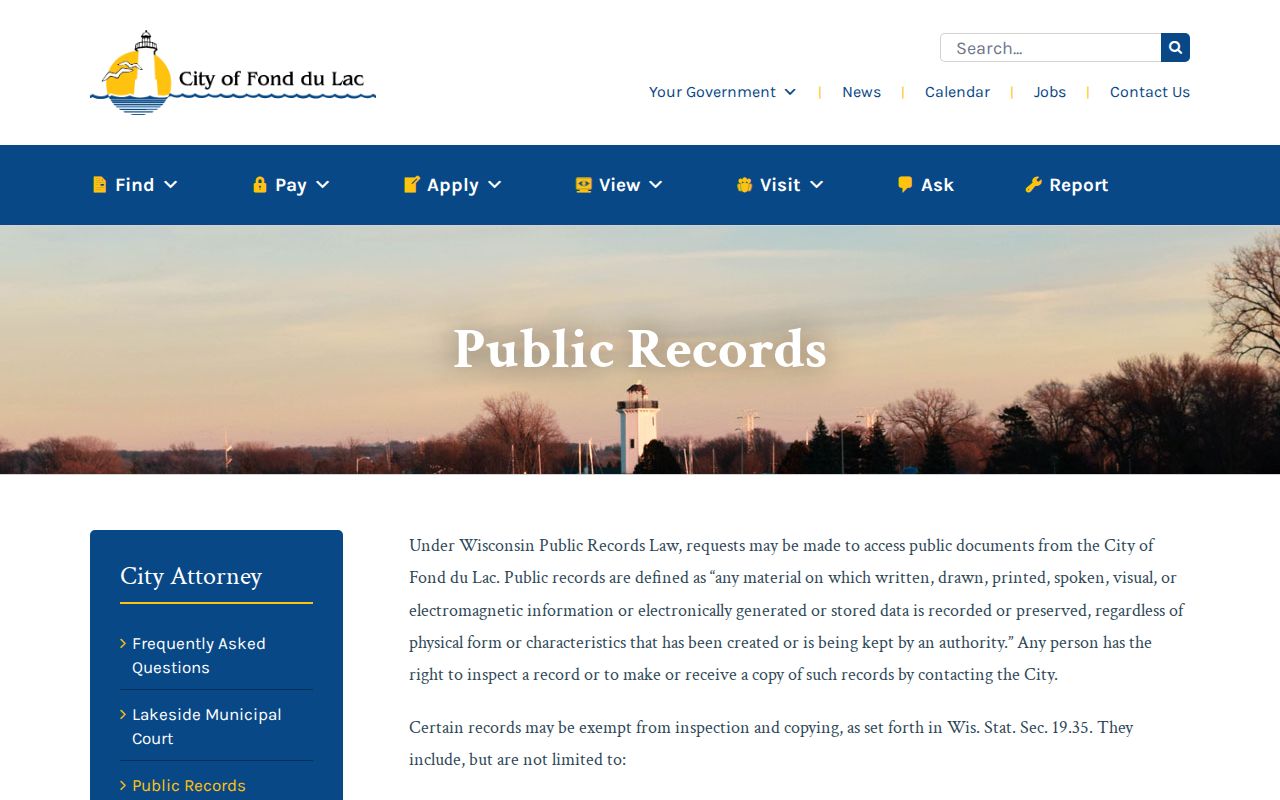
The city's own page confirms an online portal is not the only route in. A narrow request also serves everyone better. It is far easier for a custodian to locate, review, and deliver a specific record than to chase every mention of a person.
Historical Fond du Lac Directories
The Seefeld Local History Room at the Fond du Lac Public Library anchors local research. Its shelves hold city and county directories, newspapers, cemetery sources, and plat books. Maps and genealogy databases are available only in the building. Winnefox ResCarta layers on digitized Fond du Lac directories, local histories, maps, yearbooks, and newspapers. The early printed leads include Brigham's 1857-58 work and Beeson's 1865-66 directory. An 1868 gazetteer and a long run from 1903 through 1960 round them out. A 1978 criss-cross volume flips the usual order. Start with an address instead of a name.
The Seefeld Local History Room counts more than 2,600 local and regional items. It also offers one-hour librarian appointments. A single directory entry might list a name, spouse, trade, employer, and residence. Read abbreviations and gaps with each volume's own key. Cross-check a directory year against census, obituary, cemetery, or deed evidence. The collection map and a fuller reading method sit on the city directory page.
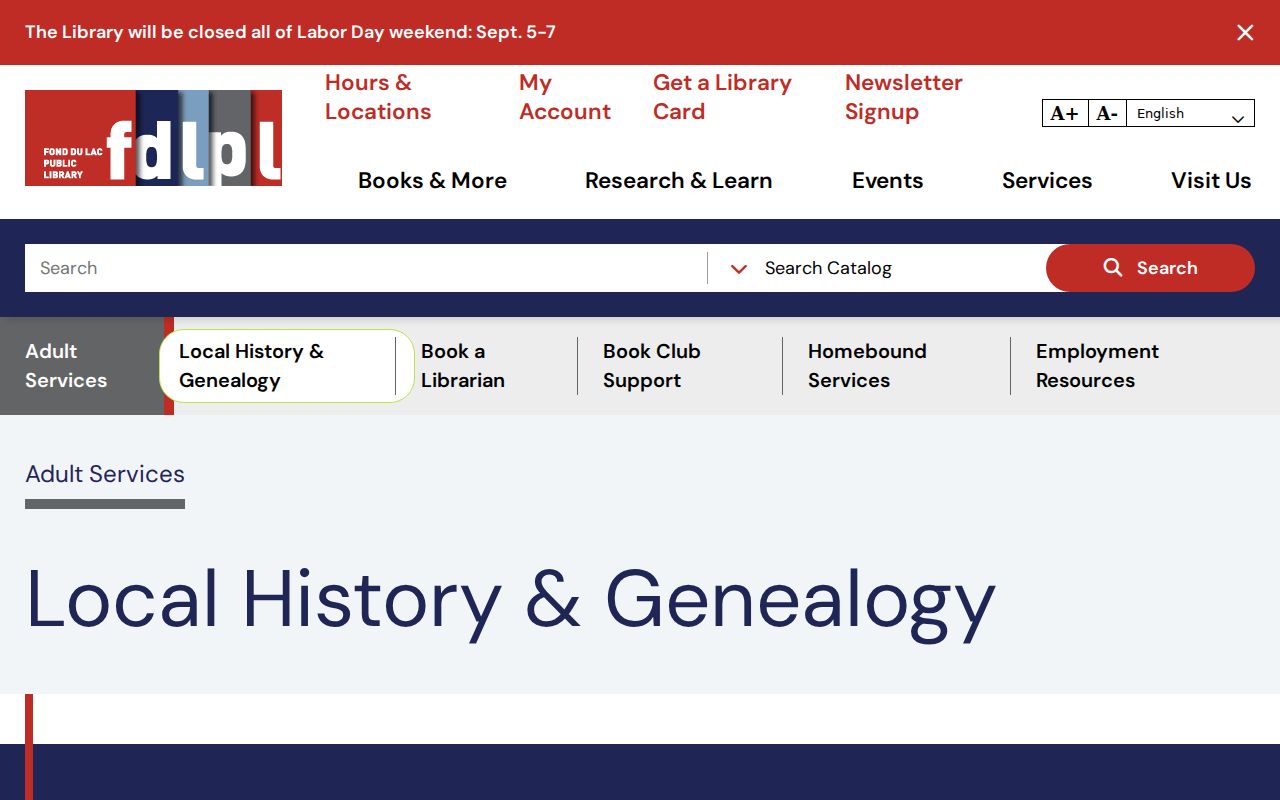
The library collection is a working access channel, not a last resort. It reaches names and household links that modern ownership and court systems simply were never built to keep.
Fond du Lac Record Time
Treat every directory source as a snapshot. County parcel metadata published January 14, 2026 says its Parceljoin2025 data was current through December 31, 2025. It also warns the map is reference-only. Tax rolls move on their own schedule. WCCA shifts as cases progress and as access rules apply. The jail roster shows current custody, not a full history. Printed directories freeze a household at one publication date. Vital and deed records preserve specific events.
Official records and compiled tools
Official custodians explain a record's purpose, coverage, and access rules. They also spell out the correction route. Commercial compilations can merge old or mismatched data without showing any source date. Use a compilation only as a lead. Then return to the county, city, court, state, library, or archive holding the original.
Write down the date of every search. Save the parcel number, case number, document number, directory year, or archive citation. Those locators let you verify a result later, after a portal changes or a name turns up in more than one Fond du Lac record.